6 link building strategies that work in 2026
Sending generic emails to hundreds of blogs no longer works. These six techniques do, and each one has a concrete way to use it.
 DavidMar 18, 202612 min read

What no longer works
Four or five years ago, link building was simpler in some ways. You sent a generic email to 200 blogs, 5% accepted, you published a mediocre article with your link, and done. It worked because Google did not penalize low-quality inbound links as aggressively.
That is over. Google has gotten much better at detecting artificial link patterns. The spam updates of 2024 and 2025 have sidelined many techniques that used to be standard practice. Sites that sold links in bulk have lost their value. And "guest post outreach" emails sent to thousands of addresses end up in spam, for both the sender and the receiver.
Does that mean link building is dead? No. It means the strategies that work now require more effort, more judgment, and more patience. But the results are better.
These six techniques are the ones we have seen produce real results in 2026, both in our own projects and in those of agencies and clients who use MyBacklinkIndex.
1. Guest posting with real standards
Guest posting has not died. What died is the cheap version: recycled articles, published on sites that accept anything, with forced links in the body text.
The version that works in 2026 looks different. Before you write anything, you spend time researching the site. Does it have a real audience? Does it publish content regularly? Do the articles get comments or social shares? Are their own outgoing links indexed?
If the answer to those questions is yes, the process looks roughly like this:
- You read several of their recent articles. Not two: five or six. You look at what topics they cover, what depth they write at, and what gaps exist.
- You send a short email proposing two or three specific ideas. You do not attach a full draft. You do not start with your credentials. You start with what the article will give their readers.
- If they accept, you write something genuinely good. With data, examples, your own experience. Not a summary of what already exists online.
- You include one contextual dofollow link to a specific page on your site, not your homepage. A page that the article's reader would actually want to visit.
The acceptance rate with this approach is around 15-20%. That sounds low, but from 30 well-researched pitches, four to six become publications with quality links. For a small site, that is a real step forward.
One detail many people miss: check that the blog you are targeting does not add a nofollow attribute to author bio links or body text links. If it does, the SEO value of the link is much lower. You can inspect the HTML of previous posts to verify this before investing time in a pitch.
2. Broken link building
This technique works because it changes the outreach dynamic. Instead of asking for something, you offer help.
The process is straightforward: you find a web page relevant to your niche that contains a broken link (returning a 404 error), you let the site owner know, and you suggest your content as a replacement.
The email is short:
Hi [name], I noticed that your article [title] has a broken link pointing to [broken URL]. I have a piece that covers the same topic and might work as a replacement: [your URL]. Either way, thought you would want to know.
No pressure. No elaborate pitch. Just helpfulness followed by an offer.
To find broken links you can use the Check My Links Chrome extension, which highlights them in red on any page you visit. At larger scale, Ahrefs has a broken backlinks report that shows outbound links from any domain returning 404 errors. You filter by relevance and look for dead links pointing to content you have already published or could write quickly.
There is a variant that works even better: finding broken pages on your competitors' sites. If a competitor had an article that accumulated many links and that page no longer exists (or they moved it), you can create an improved version and contact the sites that linked to the original. Semrush has a specific tool for this in its "Indexed Pages" report with the broken pages filter.
In a three-month period using this technique consistently, we have seen cases of 10-15 quality backlinks without spending any money. Only time.
3. Unlinked brand mentions
When someone mentions your brand, your name, or your product in an article but does not include a link to your site, you have an opportunity that costs very little to exploit.
The site already knows you. They already decided you are worth mentioning. You just need to ask them to turn that mention into a clickable link.
To find unlinked mentions you can use Google Alerts with your brand name. A more precise search: "your brand" -site:yourdomain.com on Google, excluding social media with -site:facebook.com -site:x.com -site:linkedin.com.
Semrush has a Brand Monitoring tool that automates this and lets you filter for mentions without a backlink. Ahrefs Content Explorer does something similar.
The outreach email is short:
Hi [name], thanks for mentioning [your brand] in your article "[title]". Would you be open to adding a link to [specific URL]? It would help your readers who want to learn more. Best.
Conversion rates for this technique are around 40-50%. That is the highest of all the strategies covered here. And the resulting link is genuinely editorial, because the site chose you as a reference before you contacted them.
An extra step that few people take: if the text surrounding the mention is vague ("some teams use X for this"), suggest an improvement. Something like "X, which helps ecommerce teams automate inventory tracking" builds a stronger topic association. That matters not just for Google but also for AI systems that use the context of mentions to understand what your brand is about.
4. Digital PR and journalist sources
The difference between a link from a directory and a link from a media outlet is enormous. Not just because of domain authority, but because of the type of signal it sends to Google: someone with editorial judgment decided your content was worth referencing.
Getting those kinds of links requires a different approach from traditional link building. It looks more like public relations than SEO.
The most accessible way to start is by registering as a source on platforms where journalists and content creators look for experts. The best known are Connectively (formerly HARO), Qwoted, and Featured.com. Each one has a somewhat different audience, so it is worth trying several.
When you find a relevant query, the key is specificity. Journalists receive dozens of generic responses. A response that opens with a concrete experience, delivers a clear data point or opinion, and closes with your name and credentials is the one they choose.
One practical tip: respond quickly. Journalists tend to select the first useful responses they receive. If you can respond within two to four hours of the query being posted, your chances go up considerably.
Something few blogs mention: this technique does not just generate backlinks. It generates brand mentions in authoritative outlets, and that is exactly what AI systems (ChatGPT, Perplexity, Google AI Overviews) use to decide whom to cite. A mention in a known publication, even without a link, has value because LLMs detect it and associate it with your industry.
5. Content that earns links on its own
The most sustainable way to get backlinks is to create content that others want to link to without being asked. That sounds obvious, but most companies do not spend time thinking about what kind of content naturally attracts links.
There are three formats that work consistently:
Original research. If you have data that nobody else has, publishing it makes you a mandatory source. A Semrush study on the impact of AI search on SEO traffic has accumulated more than 9,000 backlinks from 1,300 different domains. Why? Because every time someone writes about AI and SEO, they need to cite real data, and that study is the most accessible reference.
Free tools. A calculator, a template generator, a checker for something people need to check often. Tools get shared because they solve a specific problem. You do not need to build something complicated: a simple script that saves your audience time can generate links for years.
Reference guides. Not another blog post on a topic. A comprehensive resource, updated regularly, that people bookmark and share. The kind of content other bloggers link to as "for more details, read this guide."
The trick is not waiting for people to find it. Once published, you search for existing articles that could benefit from citing your resource and send them a short email. You do not ask for a link: you offer a data point or tool that improves their content.
This approach requires more initial effort than the other techniques, but it is the only one that compounds over time. A good resource can keep attracting links years after publication.
6. Replicating competitor backlinks
If a site already links to your competitor, they are more likely to link to you too. That is logical: they have already shown they care about the topic.
The process starts by identifying three to five direct competitors. Tools like Ahrefs or Semrush let you compare your backlink profile with your competitors' and find sites that link to them but not to you.
Semrush has a tool called Backlink Gap that does exactly this. You enter your domain and your competitors' domains, and it shows you sites that link to at least one of them but not to you, sorted by authority and traffic.
Once you have that list, you look for the types of pages most likely to accept including you:
- "Best tools for..." articles where your competitor appears and you do not.
- Comparison or alternative pages that mention several players in your sector.
- Reviews or analyses that could include your product alongside those they already cover.
- Newsletters or thematic roundups with public archives.
The email you send is not generic. You have read the article, you know exactly where you would fit, and you explain it in one sentence:
Hi [name], I read your article [title] about [topic]. I think [your resource] could be a useful addition for your readers because [concrete reason]. If you think it fits, I would love to be considered.
It does not work every time. But from 40 well-targeted emails, between 4 and 8 typically deliver results. And the links you get place you in the same "topical neighborhood" as your competitors, which is exactly where you want to be.
The step almost everyone skips
All six of these techniques have something in common: they generate backlinks. But getting the link is only half the job.
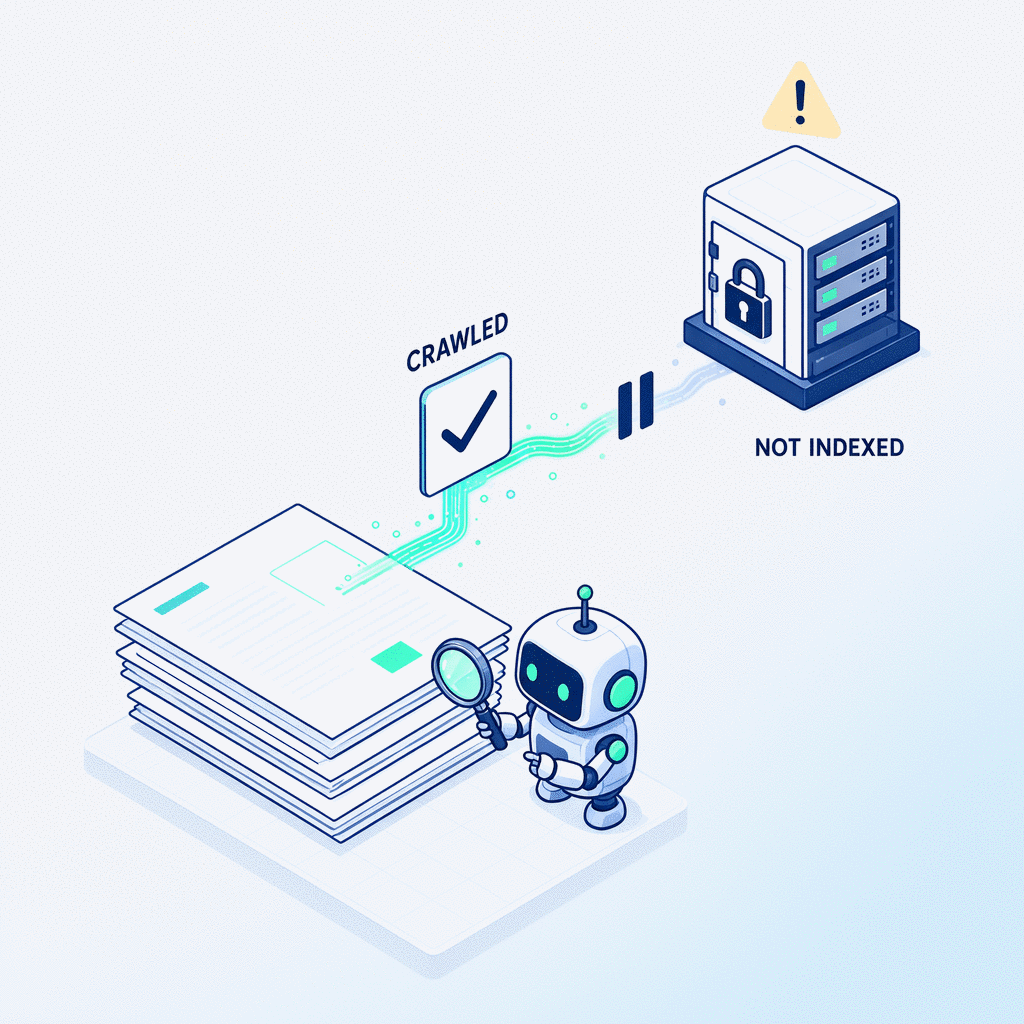
A backlink on a page that Google has not indexed does not exist for search engines. It does not pass authority. It does not count. It is as if nothing happened.
And the reality is that a significant percentage of backlinks never get indexed. Not because the link is bad, but because Google is increasingly selective about what it includes in its index. The page linking to you can have good content and good authority, and still be left out.
That is why, after using any of these six strategies, the next step is verifying that your new backlinks are indexed. And if they are not, sending signals so that crawlers visit them.
At MyBacklinkIndex we work for a full month on each URL you submit, sending continuous signals to search engines. We do not stop when the URL gets indexed: we keep reinforcing the signal so it stays in the index. You can try it with 2000 free credits, enough to verify and reinforce 20 backlinks.
What to do now
If you are just starting out, unlinked mentions and broken link building have the best effort-to-result ratio. If you already have your own content, start with content magnets. And after any strategy, verify indexing.
None of these techniques is fast. All of them require time and judgment. But the links they generate are the ones Google values in 2026, and the ones that hold up after every algorithm update.
We give you 2000 free credits to try it. No credit card needed. Enough to index 20 links.
David
Cofounder of MyBacklinkIndex. Over 6 years working in indexing and link building. Started in the IT department of a major US newspaper and worked at an agency before founding this project with Adrián.
Related articles


2000 free credits to try our service
No credit card needed. Enough to index 20 links. We stand behind our work.
Start Indexing Free