Backlinks from podcasts: the underrated tactic nobody uses
There are more podcasts than ever, but very few SEOs use them as a backlink source. A 30-minute appearance can generate three or four indexed links on sites with real authority.
 AdriánSep 29, 20269 min read
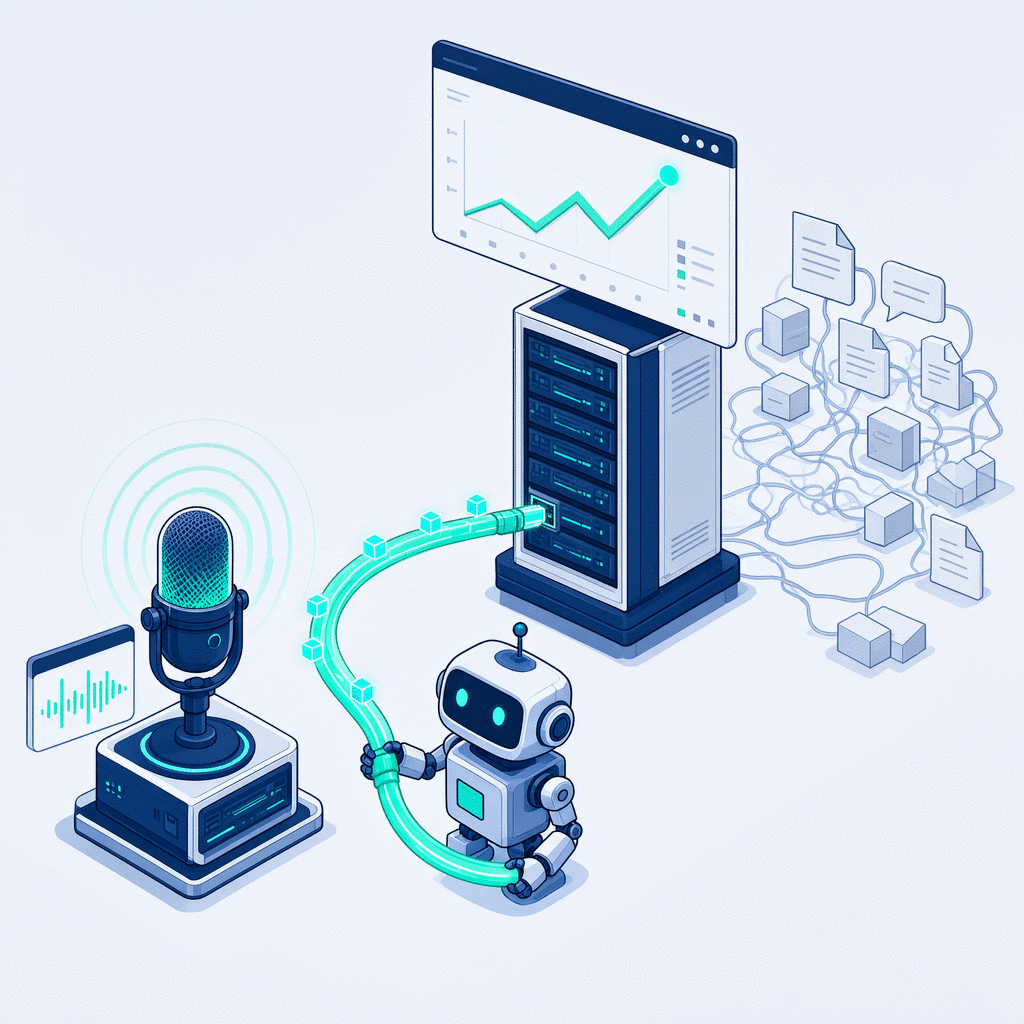
Why podcasts are a link goldmine
When we think about link building, podcasts are not usually the first thing that comes to mind. Guest posts, yes. Digital PR, yes. Broken link building, yes. But podcasts seem more like a "branding" thing than an SEO thing.
That is a mistake. An appearance on a podcast in your industry can generate more than one backlink, and of better quality than most guest posts you will publish.
Why? Because podcasts have something many blogs do not: a real audience that consumes the content, shares it, and generates activity around it. Show notes are published on a website with real traffic, authority built up over years of episodes, and inbound links from other sources. When you are mentioned in the show notes of an established podcast, the link you receive is in a context with much more authority than a generic blog that accepts guest posts.
Plus, the process of getting on a podcast is, in many cases, simpler than getting a guest post. Podcasters need guests constantly. If you have something to say and you frame it well, the acceptance rate is surprisingly high.
Types of backlinks a podcast generates
A single podcast appearance can generate multiple links. Not one, as in a typical guest post.
Link in show notes. The most direct. Almost all podcasts publish show notes for each episode on their website. They typically include the guest's name, a brief episode description, and a link to the guest's site. This is the main link, and it has the most SEO value because it is in the body of a page with textual content Google can read.
Link in the transcript. More and more podcasts publish full transcripts of episodes. If you mention your site or tool during the conversation, that mention appears in the transcript as text. Some podcasters turn those mentions into clickable links. Even if they do not, the textual mention has value for AI systems that process the content.
Link in the YouTube description. Many podcasts also publish a video version on YouTube. The video description usually includes the same links as the show notes, and YouTube has enormous domain authority. A link in a YouTube description is not dofollow, but it contributes to your online presence and is indexable.
Links on social media. The podcast will promote the episode on their social channels. If they include your link in those posts, they are additional links (though most will be nofollow). They do not carry much direct SEO weight, but they do generate referral traffic and brand visibility.
In total, one appearance can give rise to 3 or 4 links from different sources, all originating from a single 30-45 minute conversation.
How to find relevant podcasts
The first step is identifying podcasts that cover your industry and that publish show notes on their website.
Google search. Try "your industry" podcast, "your keyword" podcast guests, or "your industry" podcast show notes. The last one is especially useful because it directly shows podcasts that publish show notes on their website.
Podcast platforms. Spotify, Apple Podcasts, Podchaser, and Listen Notes have search engines that let you filter by category. Podchaser is particularly useful because it shows host information and allows more precise topic searching.
Competitors. Search your competitors' names on Google along with "podcast" or "interview." If a podcast already invited your competitor, they are very likely open to inviting you too. The topic is already validated.
What to check before reaching out:
- Do they publish show notes on an accessible website? If they only publish on podcasting platforms without their own site, there is no link to index.
- Do the show notes include links to previous guests? If yes, it is their standard practice and they will likely link to you too.
- Is the podcast actively publishing? Do not contact podcasts that have not published in months.
- Do they have a real audience? Check reviews, social media followers, or whether they appear in category rankings.
The pitch that gets you invited
Podcasters look for two things: content that interests their audience and people who speak well. Your pitch must show you can deliver both.
Email template:
Subject: Episode idea for [podcast name]
Hi [name],
I have been listening to [podcast name] for [time] and really enjoyed the episode about [specific episode]. The point about [specific detail] was especially on point.
I am [your title] at [your company], and I have worked in [relevant experience] for [X years]. I think I could bring a useful perspective on [two or three specific topics] that would fit with what you have already covered.
Would that be of interest?
Best,
[your name]
Some details:
- Mention a specific episode you listened to. Shows it is not a generic email.
- Propose specific topics, do not say "I can talk about anything." Podcasters need to know what they will record before accepting.
- Do not mention backlinks, SEO, or links. You are offering your expertise, not asking for a link.
- Keep the email short. Three paragraphs is enough.
The acceptance rate we have seen with this approach is around 20-30%. It depends heavily on the podcast's size and your experience level. Small and medium podcasts (500-5,000 listeners) are more accessible and tend to be more receptive to guests who are not "public figures."
Making sure the link appears
After recording the episode, there is a step many people skip: verifying that the show notes include your link.
Not all podcasters publish show notes the same way. Some write them themselves and ask for your bio and links. Others generate them automatically and might forget to include the link. And some publish show notes without clickable links, just your name in plain text.
To avoid surprises:
- When they accept you as a guest, send your short bio and URL directly. Do not wait for them to ask.
- Ask explicitly whether the show notes include links to guests. Most podcasters do this by default, but better to confirm.
- After they publish the episode, check the show notes. If the link is missing, contact the host in a friendly way and provide the URL.
This follow-up matters because, as we have explained in other articles, a link that does not appear on an indexed page has no value.
Podcasts and AI visibility
This is where podcasts generate value beyond traditional SEO.
Podcast transcripts are textual content that AI systems can process. When you mention your brand, your tool, or your area of expertise during a podcast conversation, that information ends up in a transcript that LLMs can read and use as a reference.
Google AI Overviews, ChatGPT, Perplexity, and Gemini use accessible content to generate responses. Podcast transcripts published on indexed websites are accessible content. If you mention "MyBacklinkIndex" explaining how backlink indexing works on a podcast, and that transcript is indexed, you have created one more source that AI systems can use to understand what your company does.
The combination of a link in show notes, a mention in a transcript, and a YouTube description creates a compound signal that strengthens your presence in both search and AI.
Verifying show notes indexing
After the episode is published, the final step is checking that the show notes page is indexed.
Most established podcasts have good indexing because Google crawls their sites regularly. But that is not always the case, especially with smaller podcasts or hosting platforms with technical issues.
Submit the show notes URL to MyBacklinkIndex to verify that Google has it in its index. If it is not indexed, our system will reinforce the signal for a month so that crawlers visit it.
We give you 2000 free credits to verify your backlinks. No credit card needed.
Summary
Podcasts are an underrated source of backlinks. A single appearance can generate links in show notes, transcripts, YouTube descriptions, and social media.
The process: find relevant podcasts that publish show notes with links, send a personalized pitch with concrete topics, and after recording, verify that the link appears and that the page is indexed.
Beyond SEO value, podcasts generate AI visibility through transcripts. Every mention of your brand in an indexed transcript is one more source LLMs can use to understand what you do.
Podcasting does not replace other link building techniques. It complements them. And the effort per backlink obtained is, comparatively, quite low.
Adrián
Cofounder of MyBacklinkIndex. Responsible for product and SEO. Before starting this project he worked in the IT department of an American newspaper, where he learned first-hand how search engines treat content.
Related articles


6 link building strategies that work in 2026

Unindexed backlinks: invisible to Google and to AI
2000 free credits to try our service
No credit card needed. Enough to index 20 links. We stand behind our work.
Start Indexing Free