Crawled: Currently Not Indexed [Solved]
You open Google Search Console and see that warning on dozens (or hundreds) of your pages. Google crawled them, knows they exist, but chose not to index them. What's going on and what can you do?
 DavidFeb 10, 202610 min read
What "Crawled: Currently Not Indexed" means
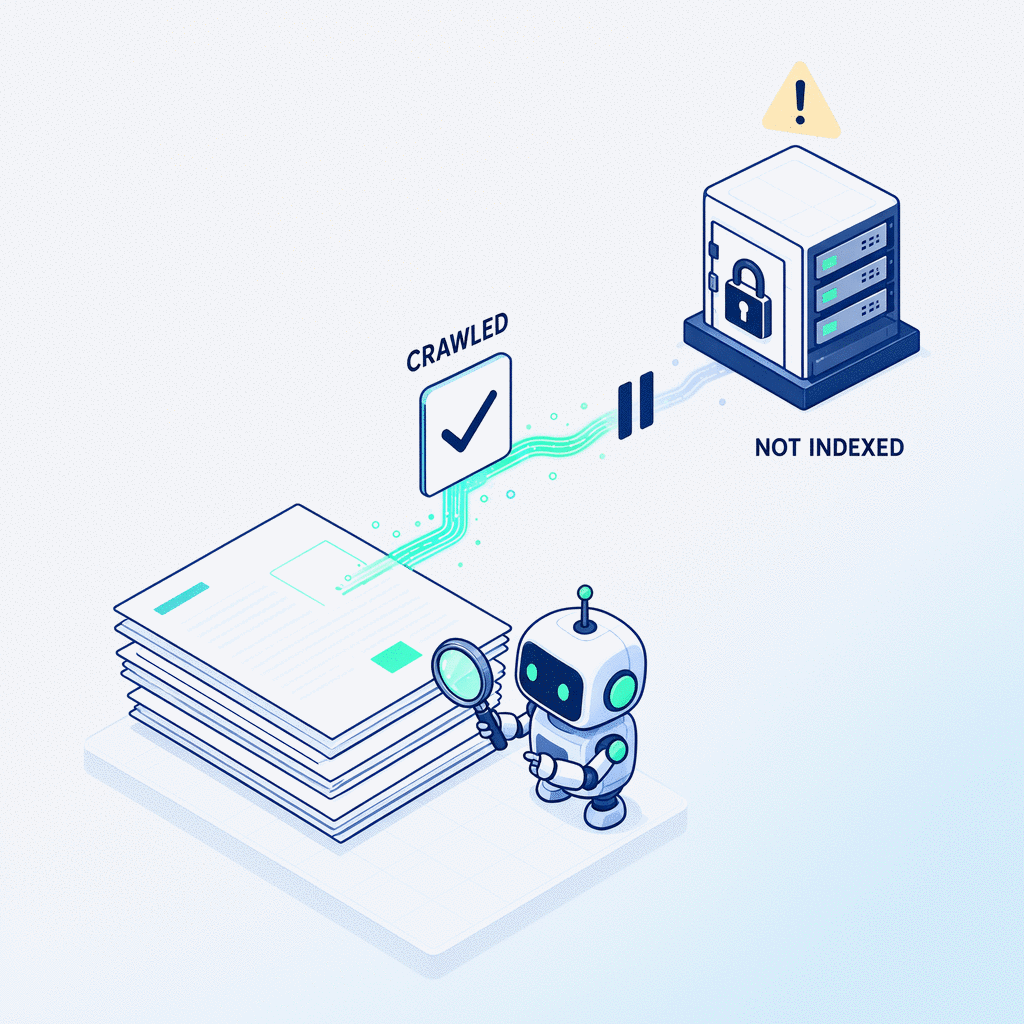
In Google Search Console, under the Pages indexing report, you'll find a status that says Crawled - currently not indexed. Here's what it means: Googlebot visited your page, downloaded it, read through it, and decided not to add it to its index.
Your page won't show up in Google's search results. It doesn't matter how many people search for exactly what you offer.
This is not a penalty. You haven't necessarily done anything wrong. It's an algorithmic decision by Google based on whether your page provides enough value to earn a spot in its index. And in 2026, that bar is higher than ever.
Don't confuse it with "Discovered - currently not indexed"
These are two different statuses in Search Console, and it's worth understanding the difference:
- Discovered - currently not indexed — Google knows the URL exists but hasn't crawled it yet. It might get to it eventually, or it might not.
- Crawled - currently not indexed — Google has already visited, processed, and evaluated the page, but decided it doesn't currently deserve to be in the index.
The second one is more concerning because Google has already made a decision. But a decision isn't final. Google re-evaluates pages periodically, especially when it detects new signals.
The real reasons Google won't index your page
Google doesn't publicly explain its exact criteria, but after years of working in indexing and seeing thousands of pages in this situation, the most common causes are:
1. Technical issues
Not the most common, but it happens. A robots.txt misconfiguration blocking CSS or JS resources, accidental noindex tags, server errors that make Google see an empty page.
Use the URL inspection tool in Search Console, click "Test live URL," and check that Google sees what you see. If the content doesn't show up there, you have a technical problem.
2. Content with little original value
This is the most common reason. In the words of a Google representative at a recent Search Central event: if thousands of people have already written about the same thing, Google may decide your page doesn't add anything new to the index.
Google has started using the term "commodity content": generic content that anyone could write. It doesn't have to be bad. It just isn't different from what already exists. If your article says the same things as the top ten results, why would Google add it?
3. Poor site structure
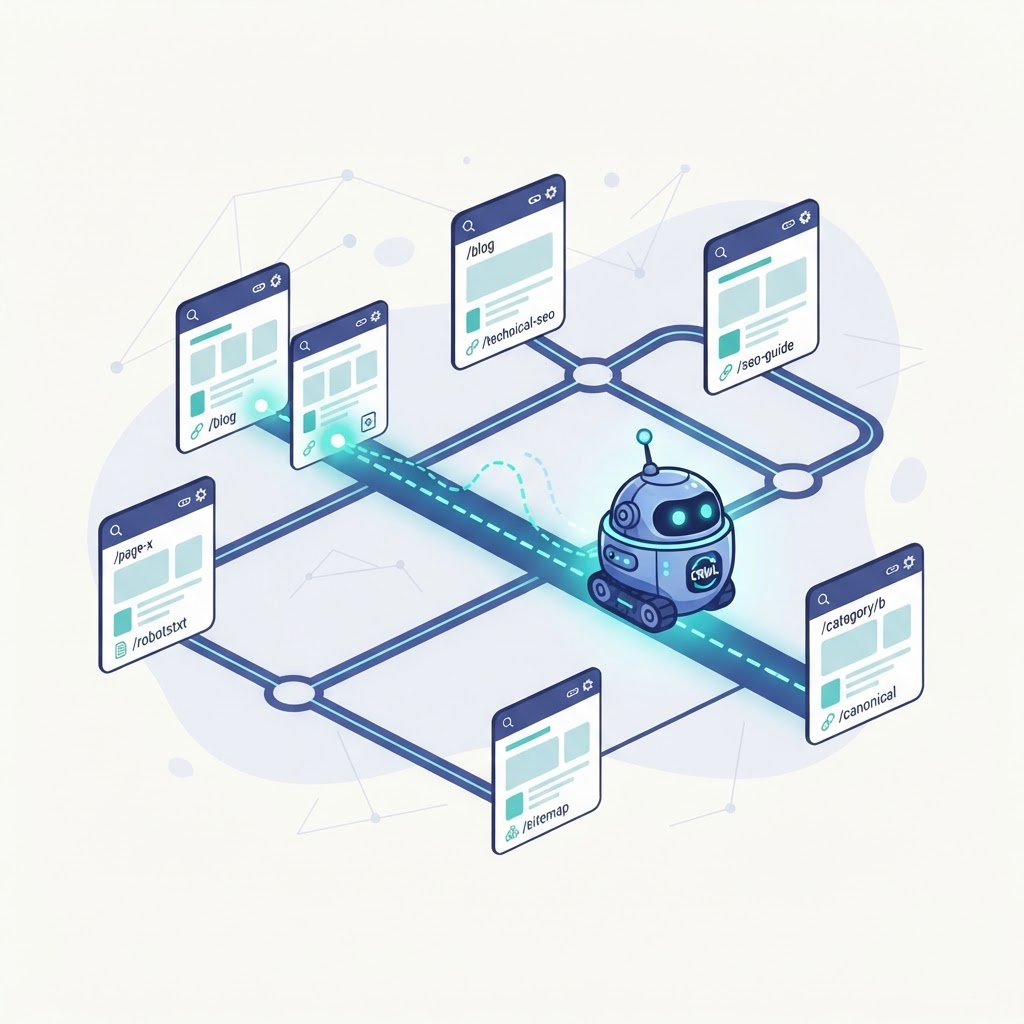
Orphan pages (no internal links pointing to them), empty categories, canonicalization issues. If Google doesn't understand how your page fits into your site's structure, it's harder for it to justify indexing it.
4. Duplicate or near-duplicate content
Especially on ecommerce sites with similar product variations, or sites that spread the same content across multiple URLs. Google filters overlapping pages to avoid filling results with copies.
5. Poor page experience
Google's John Mueller and Martin Splitt explained this in a recent podcast: quality isn't just the text. If your page has too many ads, pop-ups, slow-loading animations, or the content is buried under filler, Google takes that into account.
Mueller put it literally: users don't turn on a "magic mode" that extracts just the text. They see the whole page, with everything around it.
The commodity content problem in 2026
If there's one thing that defines indexing in 2026, it's this: Google no longer indexes content that's "good enough." It indexes content that offers something no other site has.
With the explosion of AI-generated content, the volume of pages Google has to evaluate has skyrocketed. Along with it, the amount of content saying exactly the same things. Google has responded by being more selective.
A Google representative summarized it this way: when AI lowers the cost of creating content so much, what Google looks for is two things: personal experience and knowledge that nobody else has.
If your page offers neither, it's a candidate to stay in "Crawled - currently not indexed" indefinitely.
The signal your page is missing
There's something a lot of people overlook: the content can be good, the technical setup can be clean, and Google still decides not to index. Why?
Because Google is missing a signal that this content matters.
In SEO, that signal comes from interlinking. When a page with authority and traffic links to another, it's telling Google: "look, this content deserves attention." It's a vote of confidence.
It's exactly what a good internal linking structure does within your own site: you connect your pages so Google understands what's important and how things relate to each other.
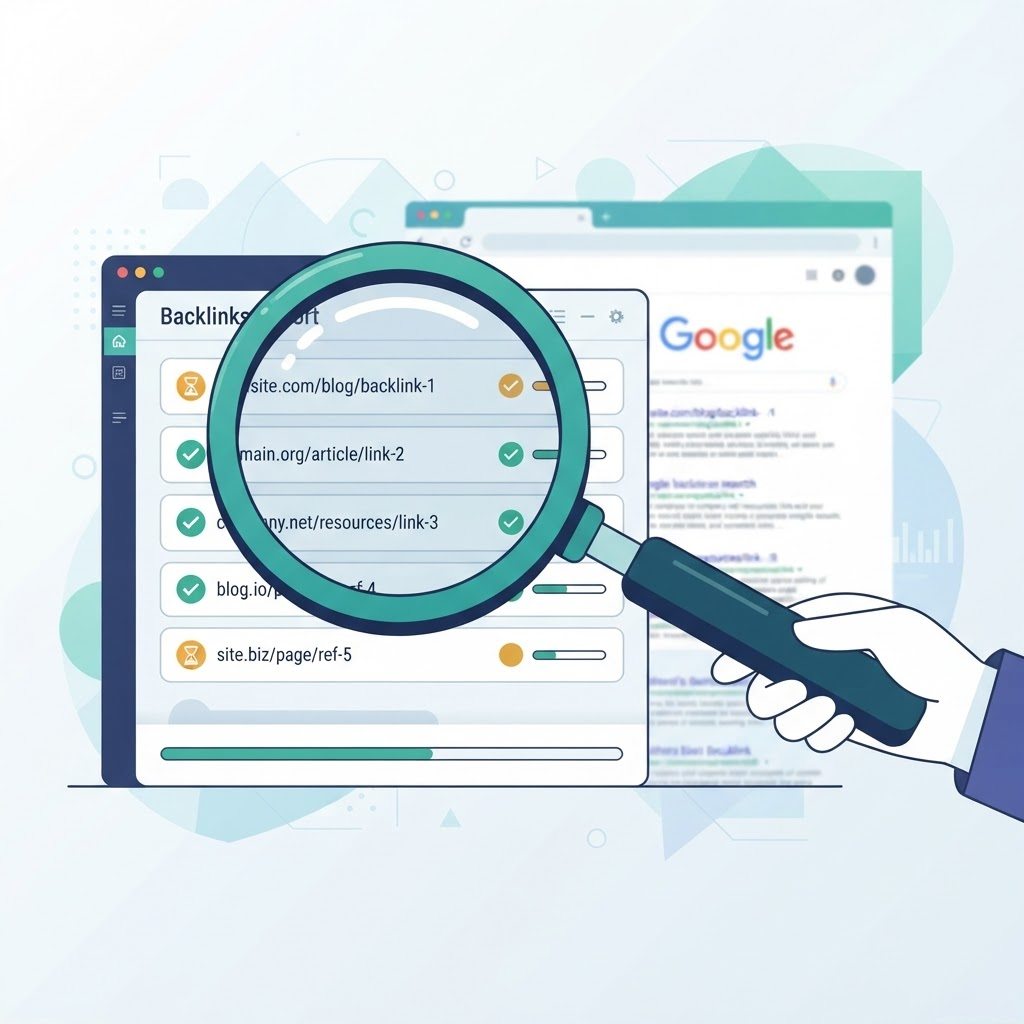
But when we're talking about external backlinks, pages from third parties linking to yours, the signal is even more powerful. You're telling the crawler: "hey, I think this content might be interesting to you." And the bot, when it receives those signals naturally and consistently, tends to come back.
That's what makes the difference between a page Google crawls once and forgets, and one it revisits, reconsiders, and eventually indexes.
How we help at MyBacklinkIndex
What we do is exactly that: send signals to search engine bots, inviting them to crawl your URLs.
We don't use tricks or aggressive techniques. All our work is based on white hat methods that mimic what a natural interlinking system would do. We tell the crawlers: "this content exists, and we think it should be visited."
Our system works continuously over a full month, sending those signals. It's not a one-off action. It's a sustained process that gives bots multiple opportunities to return to your pages and reconsider them.
Do we guarantee everything will get indexed? No. That would be lying. The decision to index belongs to the search engine, not to us. What we do know is that with our work:
- We guarantee your URLs will be crawled cleanly and systematically.
- Bing and other engines tend to respond fairly well. Getting a URL indexed in Bing is comparatively easier.
- Google is more demanding. It might index your page and still not show it in main results. But getting it indexed is already a step forward.
- The accumulated work over the month creates a pattern of positive signals that improves your chances in the medium term.
We don't promise magic. We promise clean, steady work based on years of experience. If your content has value, our work gives it the chance to be found.
What you can do yourself
Before relying on any external service, there are things that depend on you:
Review your content quality
Ask yourself: does my page offer something that isn't already in the top ten Google results? If the answer is no, work on that first. Add your own experience, real data, well-founded opinions. Content that only you can write.
Improve your internal linking
Connect your pages to each other. If you have an important article that isn't indexed, find other pages on your site that already get traffic and add links to it. Use descriptive anchor text that tells Google what the target page is about.
Check for technical issues
Use Search Console's URL inspection. Verify that your robots.txt isn't blocking important resources. Check that there are no accidental noindex tags.
Be patient
Pages can stay in "Crawled - currently not indexed" for weeks or months. Some resolve on their own as Google re-evaluates site quality. Others don't change until the value signals change.
Summary
"Crawled - currently not indexed" isn't the end of the road. It's a signal that Google needs more before deciding your page deserves a spot in its index.
The most common causes are content that doesn't offer anything new, missing internal links, and technical issues. The fix involves improving what you offer, properly connecting your pages, and giving crawlers clear signals that your content is worth their time.
That's exactly what we do at MyBacklinkIndex. We're not the fastest option. But we do things right, with clean methods, and the results stick around.
If you want to try it, we give you 2000 free credits, enough to index 20 links. No credit card required.
David
Co-founder of MyBacklinkIndex. 6+ years in indexing and link building. Started in the IT department of a major US newspaper, worked at an agency, then built this project with Adrián.
Related articles
2000 free credits to try our service
No credit card. Enough to index 20 links. We trust our work.
Start Indexing Free